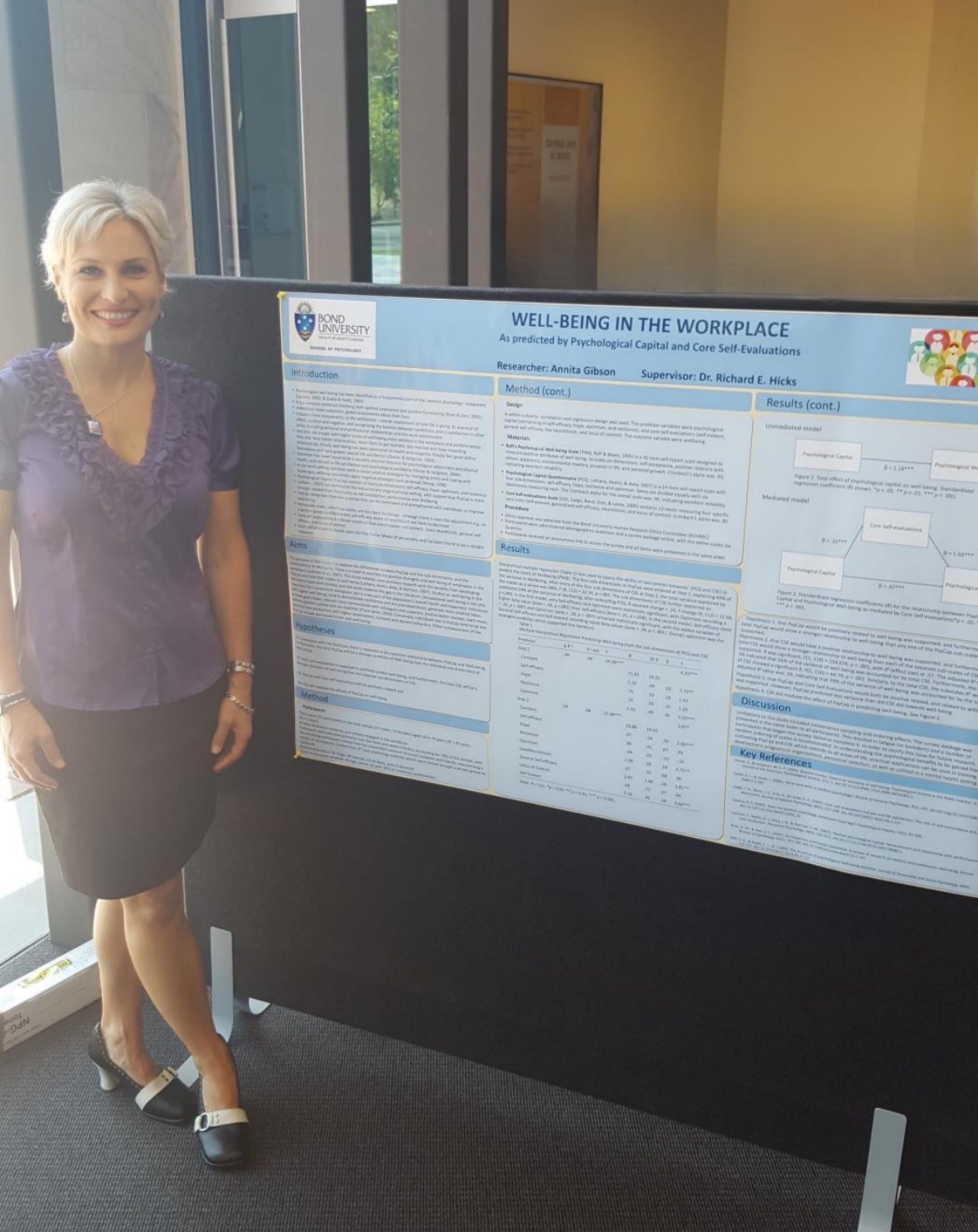
The uncertainty of today’s working environment, including prevalence of temporary employment conditions in many industries,…
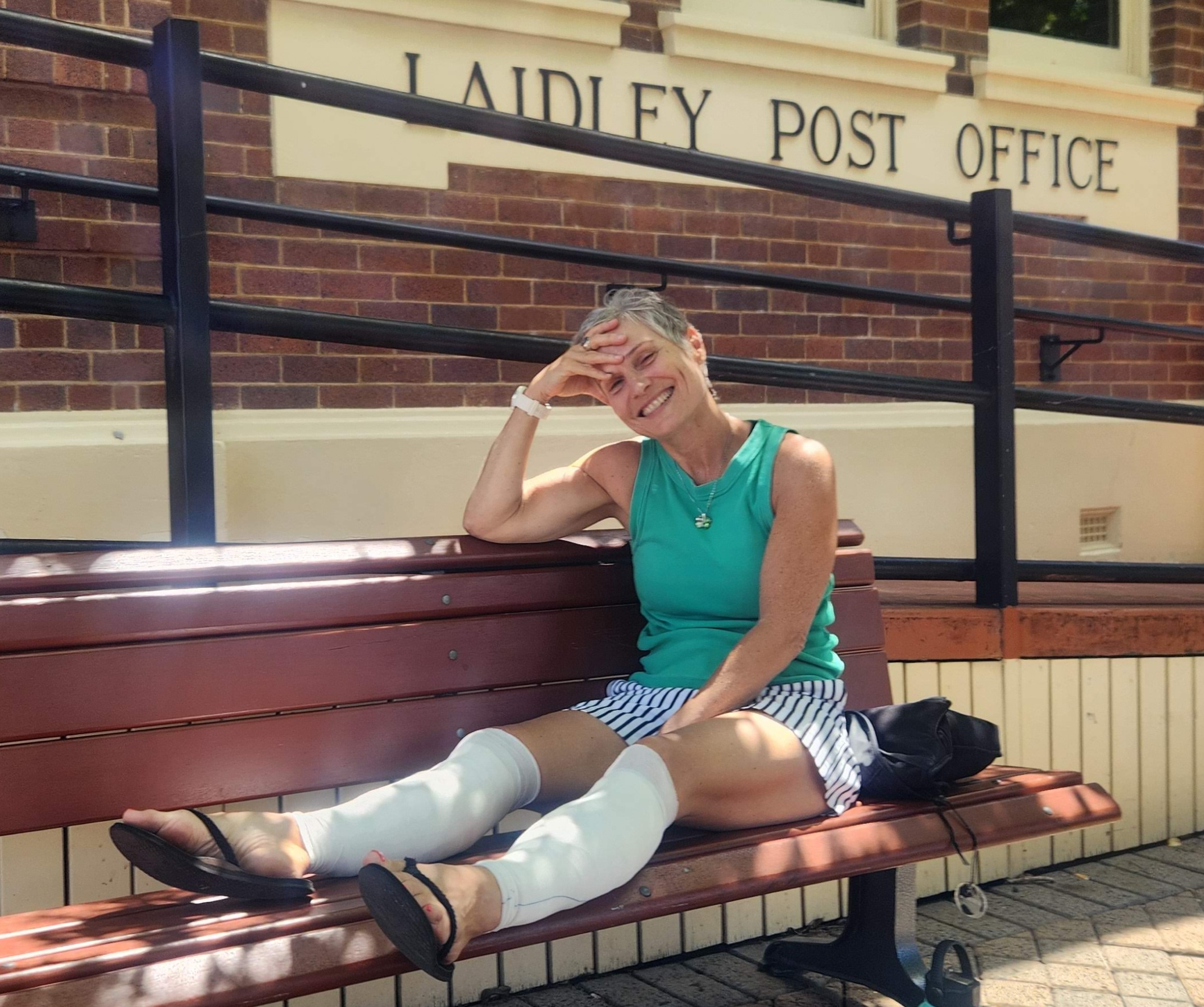
I Was Six Weeks From My First Competition. Then a Chemical Fire Changed Everything.
There are moments in life that don’t ask for your permission. They don’t care about your timeline, your goals, or how hard you’ve worked to get where you are. They simply arrive — and in an instant, everything changes.
This is one of those stories. And it’s messier than I initially thought it would be.
I was six weeks away from my first natural bodybuilding competition. Disciplined training and months of dedicated prep. Every meal, every session had been building toward stepping on that stage for the first time.
I was locked in. Focused. Ready.
Then, on the farm, a highly flammable chemical caught fire and exploded against my skin.
The Pain That Changes You
I have never felt physical pain like what followed. Not just in the immediate aftermath, but in the five days after — when my nerves began to regenerate. Five days of constant, electric, shooting pain through both legs. You cannot push through it. Even though “walking it off” was something that became necessary.
And yet — somewhere inside that agony — I felt genuinely grateful.
Because in those moments after the chemical fire, I became acutely aware of what hadn’t been hit. Not my hands. Not my face. I wasn’t in critical condition. I wasn’t being rushed to intensive care. I wasn’t facing something far worse.
And I could have been. Easily.
That awareness didn’t erase the pain. But it completely changed my relationship to it. I wasn’t a victim of what had happened — I was someone who had come through something serious, largely intact, with a body already doing the most extraordinary thing: healing itself.
That gratitude became my anchor.
The Goalposts Have Moved. Twice.
Initially, I was told it would be one to three weeks of recovery. That was five weeks ago.
Right now, I sit at five weeks post-burn, attending a medical centre every two days for dressing changes following a strict healing protocol. Every two days. That’s the rhythm. That’s the commitment. That’s the time, the patience, the effort — managed by a medical team who brings professionalism, kindness, compassion, and genuine gentleness to every single interaction.
I want to be clear: I am deeply grateful for them. For the care they’ve provided. For the way they’ve handled this with such compassion. For their expertise and their humanity. That gratitude matters, and I’m naming it here.
The goalposts have shifted twice. April wasn’t possible. Neither was May. Now I’m looking at end of year, possibly into next year, before I step on that stage.
That has been genuinely difficult.
But here’s what surprised me: I wasn’t angry at my body. I was never really angry at my body. As a fit, healthy individual with a good diet and solid training, I expected recovery to be quick. The sadness, the frustration, the disappointment — that’s been the real work. Especially the disappointment. Hearing that healing would take longer than I anticipated. Realising my body, despite everything I’ve done right, moves at its own pace.
And that disappointment has taught me something crucial: I need to have grace for myself.
Let me paint the reality: five weeks in, every two days, I show up at the medical centre. The team changes the dressing. Follows the protocol. Does what my body needs. With care. With professionalism. With a kindness that matters more than I can fully articulate when you’re vulnerable and in the middle of healing.
That repetition — that commitment, that perseverance — has become its own kind of teacher.
Because healing doesn’t care about your timeline. It has its own intelligence, and its job is to regenerate at the pace it needs to, not the pace you want.
Every two days, I choose to show up for that process. Not because it feels good. But because healing requires consistency. It requires patience. It requires the willingness to do the small thing, again and again, even when you can’t see the finish line.
That is perseverance. The real kind.
The Mental Game
The physical healing is one thing. The mental and emotional work is another.
When you’re told you have one to three weeks of recovery, you prepare yourself mentally for that. You build a story around it. And then that timeframe extends. And extends again.
The grief of that — the disappointment, the frustration, the realisation that your body won’t cooperate with your timeline — that is where the actual transformation happens.
I’ve had to sit with the discomfort of not knowing. With the fear that maybe this will take longer than I think. And I’ve realised something crucial: the mental and emotional regulation during recovery is just as important as the physical healing itself. Maybe more important.
Because your mind can either support your body’s healing or work against it. Your emotional state directly impacts your nervous system, your inflammation response, your ability to trust and rest.
So I’ve chosen to do the internal work. The mindset work. The work of choosing, every single day, to believe that this extended timeline is not a failure — it’s a redirection. That what is happening is for me, not to me.
And I’ve chosen to hold gratitude alongside the disappointment. Gratitude that it wasn’t worse. Gratitude for the medical team. Gratitude for my body, doing what it knows how to do. That gratitude doesn’t erase the difficulty — but it changes how I move through it.
What Surrender Actually Looks Like
Surrender is not weakness. It is not giving up.
Real surrender is an active, intentional choice to stop resisting what is actually true and instead work skillfully with reality as it presents itself.
Every two days, when I show up at the medical centre, I’m making that choice again. Rest. Trust. Let the body do what it was designed to do.
For someone wired to be the driving force — to create momentum, to push forward — learning to fully trust a process I couldn’t control has been the deepest practice of this entire experience.
And here’s what I know now about resilience: Real strength isn’t only found in the pushing. It’s found in the pausing. In the listening. In the willingness to be still long enough to let the healing happen.
The Vision Hasn’t Changed. The Timeline Has.
I will step on that stage. But it won’t be in April. It won’t be in May. And I’ve made peace with the fact that it might be end of year, or into next year, before I’m ready.
When I do step on that stage — whenever that is — I won’t just be bringing a physique that has been trained and refined. I will be bringing a mindset forged in something real: in pain, in surrender, in the daily practice of showing up every two days and doing what needs to be done, even when you can’t see the finish line.
I will be bringing gratitude — for what wasn’t lost, for the people who’ve supported me, for a body that is healing exactly as it needs to.
That is the kind of strength that no training programme can give you. It can only be earned through the kind of grace — for yourself, for your body, for the process — that doesn’t come naturally until you’re living it.
Whatever you are facing right now — whatever challenge has arrived without your permission and disrupted the plan you worked so hard to build — I want you to hear this:
Maybe it won’t resolve on the timeline you expected. Maybe the goalposts will move. Maybe you’ll have moments of real frustration and disappointment.
That doesn’t mean you’re failing. It means you’re healing.
And healing is rarely linear. It’s messy. It’s emotional. It requires patience you didn’t know you had and grace you have to build in real time.
But here is what I know: the vision isn’t done. It has simply moved. The priority isn’t the destination anymore — it’s the person you’re becoming in the wait. It’s the gratitude you find alongside the difficulty. It’s the grace you extend to yourself when the timeline shifts.
And so am I. 🔥
This experience has deepened everything I bring to my work in mindset and performance — not as theory, but as lived, embodied truth. The mental and emotional work that happens alongside physical challenge is where real transformation lives. If you’re navigating your own version of an extended recovery, a shifted goalpost, or the deep work of grace and gratitude during a difficult season, I’d love to hear from you. Sometimes the most powerful thing is simply starting a conversation with someone who understands. Reach out — I’m here.
Comments

Related Posts